

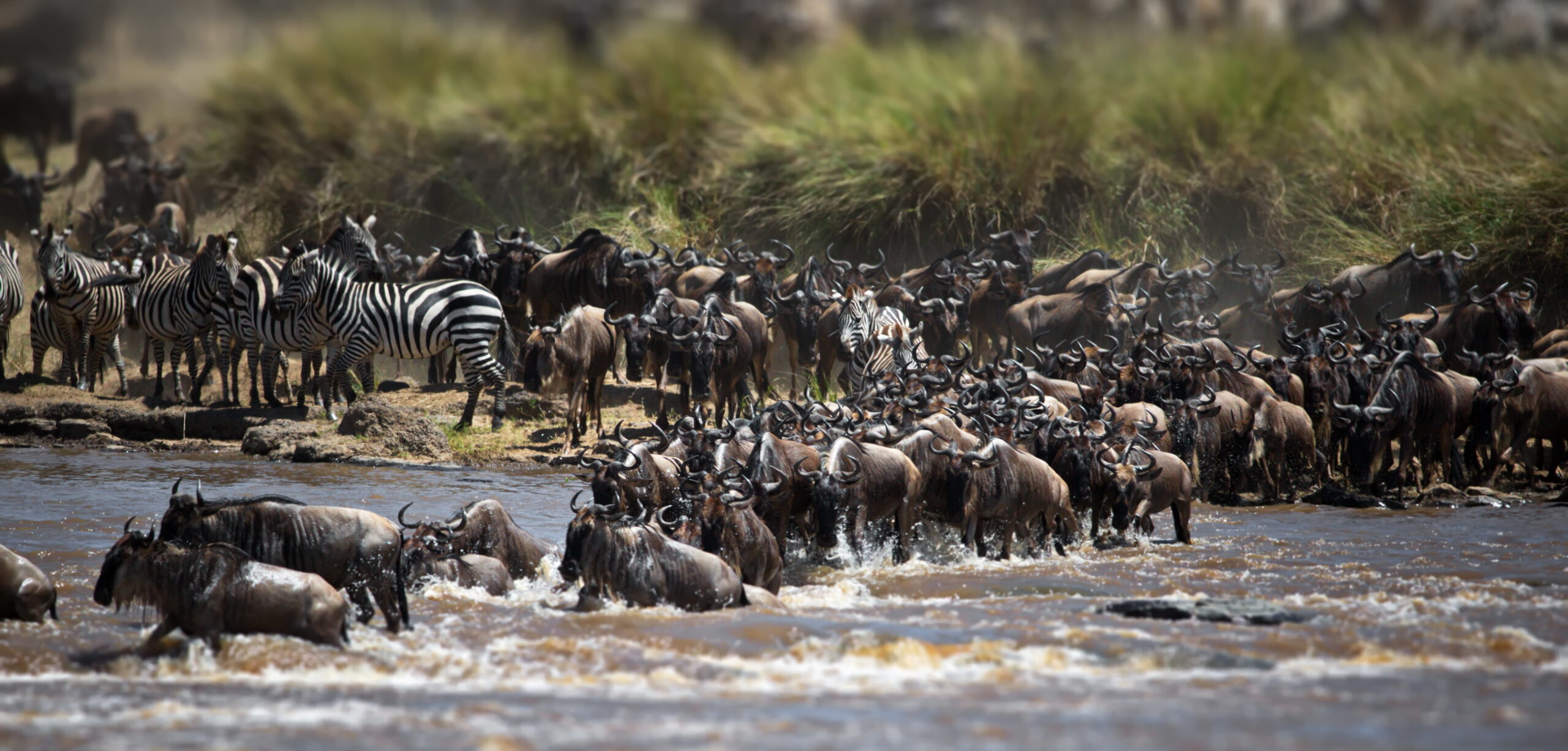
The wildebeest migration in 2027 promises to be one of Tanzania’s most remarkable wildlife experiences. Across the greater Serengeti ecosystem, enormous herds of wildebeest travel with zebras and gazelles in a continuous search for fresh grass and water. Lions, cheetahs, leopards, hyenas and crocodiles follow or wait along the route, creating dramatic wildlife encounters throughout the year.
However, the Great Migration is not a single event that happens on one fixed date. It is a natural, year-round movement influenced by rainfall, grazing conditions and available water. That means there is no single “best month” for every traveller. Your ideal time depends on whether you want to see newborn calves, large herds on the open plains, the Grumeti River, the famous Mara River crossings or a quieter migration safari with fewer vehicles.
At Relax Africa Tours & Safaris, we help travellers choose the right area of the Serengeti for their travel dates. Our locally based team plans private and small-group safaris using realistic seasonal information, carefully selected accommodation and experienced guides who understand how the herds move.
What Is the Great Wildebeest Migration?
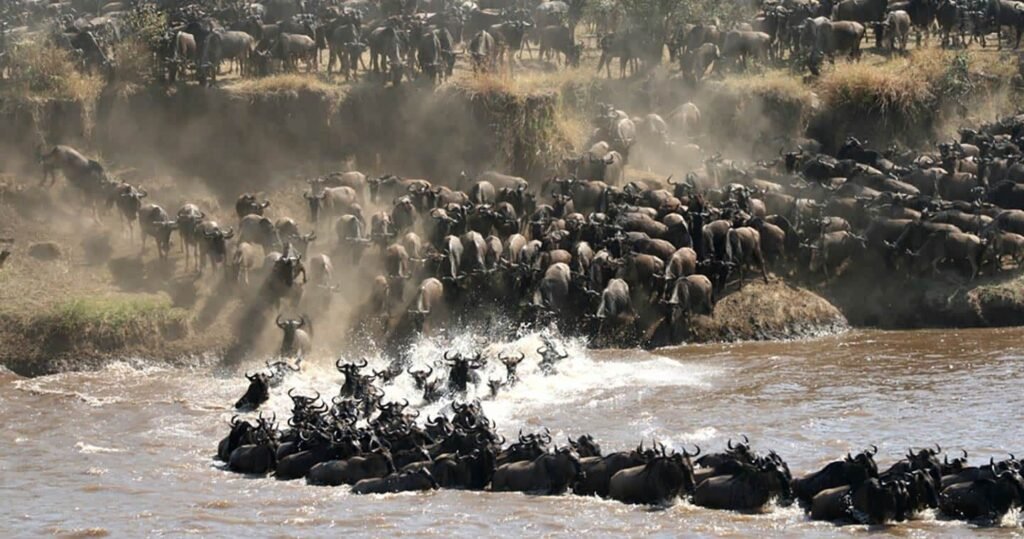
The Great Wildebeest Migration is a continuous circular movement through Tanzania’s Serengeti ecosystem and Kenya’s Maasai Mara. More than one million wildebeest participate, accompanied by hundreds of thousands of zebras and gazelles. These herbivores travel in response to fresh grazing, rain and accessible water.
The migration does not have a defined beginning or end. While one part of the herd may be moving north, other groups can be spread across central, western or southern parts of the ecosystem. This is why visitors should avoid thinking of the migration as one tightly packed group travelling in a perfectly straight line.
The UNESCO World Heritage Centre recognizes Serengeti National Park for its extraordinary ecological importance and describes its annual migration as one of the world’s most impressive natural spectacles. The official Tanzania National Parks Serengeti page also provides useful information about the park and its wildlife.
For travellers, the important lesson is simple: choose the correct Serengeti region for your month and allow enough time for game drives.
Wildebeest Migration Calendar for 2027
The following guide shows the herds’ usual seasonal pattern. It should be treated as a planning guide rather than a guaranteed schedule because rain can cause the animals to move earlier, later or in different directions.
January 2027: Southern Serengeti and Ndutu
In January, many wildebeest normally gather across the short-grass plains of the southern Serengeti and the Ndutu area of the Ngorongoro Conservation Area. Seasonal rain renews the grass, providing the nutrition needed by pregnant females before calving.
This is a beautiful time to visit. The plains become green, migratory birds arrive and enormous herds may spread across the landscape. January is particularly attractive for photographers because the scenery is fresh and the skies can produce dramatic light.
Recommended areas include Ndutu, Kusini, Gol Kopjes and the southern Serengeti plains.
February 2027: Wildebeest Calving Season
February is generally considered the heart of the wildebeest calving season. Large numbers of calves are born within a relatively short period, filling the southern plains with new life.
The abundance of vulnerable young animals also attracts predators. Lions and hyenas watch the herds, while cheetahs take advantage of the open plains to hunt. Visitors may observe maternal behaviour, newborn calves learning to stand and intense predator-prey interactions.
February is one of the strongest choices for families, wildlife photographers and travellers who prefer the green season over the busier river-crossing period. Booking early is important because the best-positioned Ndutu camps have limited capacity.
March 2027: Calves, Predators and Green Plains
During March, the young wildebeest become stronger and more mobile. Herds normally remain around Ndutu and the southern or southeastern Serengeti while grazing is still available.
March can offer excellent wildlife viewing with somewhat fewer visitors than peak February. The landscape remains green, birdlife is abundant and predator activity continues. Occasional rain should be expected, but showers often create excellent photographic conditions rather than preventing an enjoyable safari.
April 2027: Movement Through the Southern and Central Serengeti
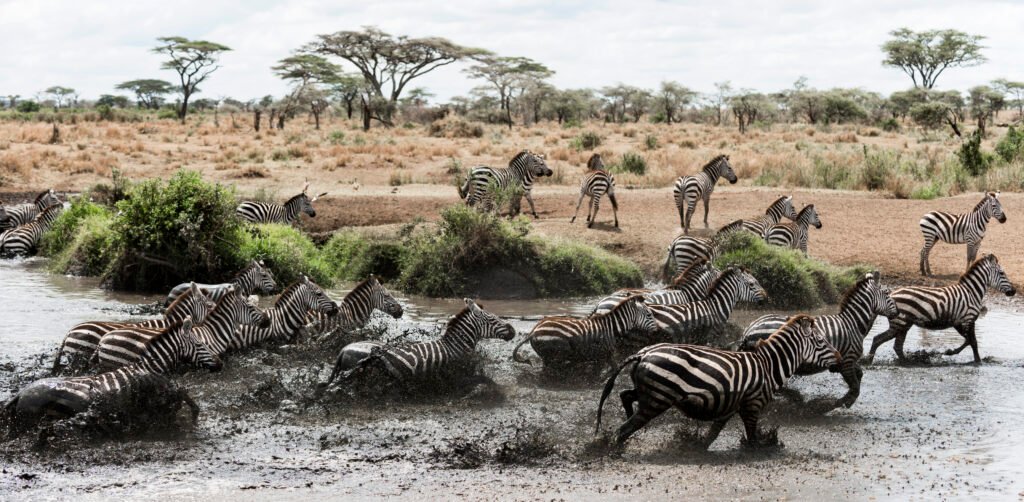
In April, the longer rains can encourage the herds to begin moving away from the southern plains. Their precise distribution depends heavily on rainfall.
Some groups may move toward Moru Kopjes and the central Serengeti, while others can remain farther south where grazing is still favourable. April is part of Tanzania’s green season, so travellers may benefit from quieter safari areas and seasonal accommodation offers.
Roads can become muddy following heavy rain, making an experienced driver-guide and a properly maintained four-wheel-drive safari vehicle particularly important.
May 2027: Herds Move North and West
By May, long columns of wildebeest often move through the central Serengeti toward the Western Corridor. This is sometimes called the rutting period, when breeding activity produces energetic behaviour within the herds.
Visitors may see thousands of animals moving across the plains rather than gathered around a river. The scale of the migration becomes clear as lines of wildebeest stretch toward the horizon.
May is suitable for adventurous travellers who do not mind occasional rain and want a less crowded Serengeti experience. A flexible itinerary covering both central and western areas can improve your opportunities.
June 2027: Western Corridor and Grumeti Region
June usually brings large concentrations of wildebeest into the Western Corridor, including areas around the Grumeti River. The herds may encounter channels inhabited by crocodiles, although Grumeti crossings differ from the more famous crossings in the northern Serengeti.
As conditions become drier, the wildebeest continue moving north. June is an excellent transitional month because it can combine migration viewing with comfortable temperatures, improving road conditions and strong resident wildlife sightings.
Travellers considering this period can explore Relax Africa’s Tanzania safari packages or the dedicated five-day Serengeti migration safari in June.
July 2027: Northern Movement Begins
During July, many herds move toward the northern Serengeti. Some may arrive near the Mara River during the month, but the timing varies each year.
A river crossing should never be promised for a specific day. Wildebeest may gather near the river for hours or days, move away without crossing, or suddenly enter the water with little warning. This unpredictability is precisely what makes the event so powerful.
For a July safari, consider spending at least three nights in the northern Serengeti. More time gives your guide the flexibility to explore different crossing points while still enjoying lions, elephants, giraffes, leopards and other wildlife.
August 2027: Peak Mara River Crossing Season
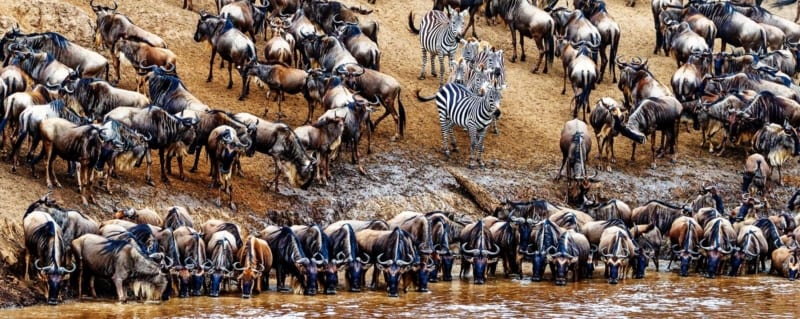
August is traditionally one of the most requested months for a Mara River migration safari. Herds are often distributed across the northern Serengeti and may cross the river in either direction.
Crossings can be dramatic. Wildebeest gather along steep banks before entering fast-moving water, where currents, difficult exits and crocodiles create genuine danger. Nevertheless, guests must arrive with realistic expectations: no tour operator or guide can schedule a crossing.
August is a busy travel month. Northern Serengeti camps, internal flights and suitable safari vehicles should be reserved well in advance. Travellers interested in combining Tanzania and Kenya can consider our seven-day Kenya and Tanzania fly-in migration safari.
September 2027: Northern Serengeti and Mara River
September normally continues to offer strong migration opportunities in northern Serengeti. Herds may remain on either side of the Tanzania–Kenya border, and repeated movements across the Mara River are possible.
The weather is usually dry, wildlife gathers around permanent water and visibility is excellent. This makes September suitable for migration viewing as well as a broader Big Five safari.
Because the animals are spread across a large ecosystem, staying in a well-positioned northern camp is more important than staying at a famous luxury property located far from the herds.
October 2027: Northern and Northeastern Serengeti
In October, some herds remain in northern Serengeti while others begin moving south through the northeastern areas as seasonal weather patterns change.
River crossings can still occur, particularly earlier in the month, but they become less predictable. October can be a rewarding option for travellers who want dry-season wildlife viewing without relying entirely on a crossing.
A flexible route connecting northern and central Serengeti is often the best approach.
November 2027: Return Toward Central Serengeti
The short rains usually encourage the migration to move southward. Herds may pass through northeastern or eastern Serengeti before reaching the central areas.
November is a transitional month, so the animals can be widely distributed. This makes updated local information valuable. It can also be an attractive time for travellers seeking green landscapes, migratory birds and fewer vehicles than the busiest dry-season months.
Rainfall is often delivered in short showers rather than continuous all-day rain, although conditions vary.
December 2027: Returning to the Southern Plains
By December, many herds normally return toward the southern Serengeti and Ndutu plains, completing another stage of their circular journey.
Fresh grass begins to develop after seasonal rain, and pregnant females prepare for the approaching calving period. December offers an appealing combination of green scenery, abundant wildlife and festive-season travel.
Christmas and New Year are popular, so accommodation and flights should be reserved early.
Best Time to See the Wildebeest Migration in 2027
The best time depends on the experience you want:
- Choose January to March for green plains, newborn calves and predator action.
- Choose May to June for moving columns and the Western Corridor.
- Choose July to October for northern Serengeti and possible Mara River crossings.
- Choose November to December for the southward movement and fresh green landscapes.
If this is your first safari and you want the best balance of migration and general wildlife, consider spending four or five nights in the Serengeti. Our guide to how many days to spend in Serengeti National Park will help you select an appropriate duration.
You can also read our complete guide to the best time to visit Tanzania when combining the migration with Ngorongoro, Tarangire, Kilimanjaro or Zanzibar.
Can a Mara River Crossing Be Guaranteed?
No. River crossings are spontaneous natural events and cannot be guaranteed.
A responsible safari company can position you in the correct region, provide sufficient time and use current local information to improve your chances. However, nobody controls the weather or the wildebeest.
Be cautious if an operator promises a crossing on a particular date. A better approach is to stay several nights in northern Serengeti and allow your guide to monitor the herds. Even without a crossing, this region provides outstanding landscapes and wildlife.
Where Should You Stay?
Your accommodation should match the seasonal location of the migration.
For January through March, select a camp in Ndutu or southern Serengeti. For May and June, central or western Serengeti may provide better access. From July through October, choose northern Serengeti accommodation near the Kogatende or Lamai areas. During transitional months, central Serengeti can provide useful access to several directions.
Options range from comfortable tented camps and midrange lodges to exclusive luxury properties. Mobile or seasonal camps can be particularly valuable because they relocate to remain close to the expected migration areas.
Relax Africa Tours & Safaris recommends accommodation based on location, service, comfort and your budget—not simply the most famous name.
Suggested Wildebeest Migration Safari Length
A five-day itinerary can work when time is limited, but seven to nine days offers a more complete experience.
A balanced migration safari might include:
- One night in Arusha after arriving in Tanzania.
- One or two nights near Tarangire or Ngorongoro.
- Three to five nights in the appropriate Serengeti region.
- An optional internal flight to reduce long driving hours.
- A Zanzibar extension after the safari.
Travellers who prioritize the migration should dedicate more nights to Serengeti instead of trying to visit too many parks. A slower itinerary produces more time in wildlife areas and less time packing or driving between accommodations.
What Else Can You See During a Migration Safari?
The Great Migration may be the main attraction, but the Serengeti offers exceptional wildlife throughout the year. Depending on location and luck, you may encounter lions, elephants, leopards, cheetahs, spotted hyenas, buffaloes, giraffes, hippos, crocodiles, jackals and many antelope species.
Central Serengeti is especially valuable for year-round predator viewing. Ngorongoro Crater adds a different ecosystem and a strong opportunity to observe diverse wildlife within a compact area. Tarangire is known for elephants, baobab landscapes and productive dry-season game viewing.
This diversity means your safari can still be highly rewarding even if the wildebeest do not behave exactly as expected.
Planning and Booking Your 2027 Migration Safari
Migration months attract international travellers, photographers and safari groups. The most strategically located camps often fill before properties farther away from the herds.
For July, August, September and the February calving season, early planning provides a better choice of camps and room categories. It also makes it easier to secure internal flights and a private safari vehicle.
When requesting your quotation, include:
- Your intended travel dates.
- Number of adults and children.
- Preferred safari duration.
- Accommodation level.
- Whether you want a private or small-group safari.
- Interest in calving, river crossings or photography.
- Your approximate budget per person.
- Any Zanzibar, Kilimanjaro or cultural extension.
This information helps our team prepare a useful itinerary instead of sending you a generic package.
Why Book With Relax Africa Tours & Safaris?
Relax Africa Tours & Safaris is a locally based Tanzanian company serving travellers who want clear planning, reliable support and genuine local knowledge.
Our migration safaris can include private four-wheel-drive transportation, an experienced driver-guide, park fees, carefully selected accommodation, airport transfers and domestic flights where required. Every itinerary can be adjusted according to your dates, travel style and budget.
Rather than promising an impossible fixed wildlife event, we plan around the seasonal movement of the herds and give your guide enough flexibility to make informed decisions during the safari.
Frequently Asked Questions
When is the 2027 wildebeest calving season?
The main calving period is normally between late January and March, with February often considered the peak. The southern Serengeti and Ndutu areas are generally the best locations.
When are the Mara River crossings in 2027?
Crossings are commonly associated with July through October, particularly August and September. Exact dates cannot be predicted or guaranteed.
Is Tanzania or Kenya better for the migration?
Both countries form part of the wider ecosystem, but Tanzania hosts the migration for much of the annual cycle. The southern Serengeti offers calving, the Western Corridor offers seasonal movement and the northern Serengeti provides access to the Mara River.
How many nights should I spend in Serengeti?
Three nights is a practical minimum for many itineraries, while four or five nights provides greater flexibility. Photographers and travellers focused on river crossings may prefer longer.
Is a migration safari suitable for children?
Yes. A private vehicle allows families to manage their own pace. The itinerary should include reasonable driving times, family-friendly accommodation and rest periods.
What should I pack?
Bring neutral lightweight clothing, a warm layer for early mornings, comfortable closed shoes, sun protection, binoculars, personal medication and camera equipment. Soft-sided luggage is normally required for small internal flights.
Can I combine the migration with Zanzibar?
Yes. Flying from Serengeti to Zanzibar creates an excellent wildlife-and-beach holiday while avoiding a lengthy return drive.
Start Planning Your Wildebeest Migration Safari in 2027
The wildebeest migration in 2027 is not simply one river crossing or one photograph. It is a year-round story of movement, survival, birth and renewal across one of Africa’s most important ecosystems.
Choosing the correct month and Serengeti region makes a major difference. Whether you want to experience the Ndutu calving season, the moving herds of the Western Corridor or the dramatic northern Serengeti, Relax Africa Tours & Safaris can create an itinerary suited to your goals.
Contact Relax Africa Tours & Safaris for a personalized 2027 migration safari proposal.
Email: info@relaxafricasafari.com
Phone/WhatsApp: +255 624 050 652
Tell us your dates, group size, preferred comfort level and the migration experience you want to see. Our local team will help you choose the best route and prepare a clear, tailored quotation.